Why Lindsey Heaps Is the Most Important Signing in Denver Summit FC History
Why Lindsey Heaps Is the Most Important Signing in Denver Summit FC History
When Denver Summit FC signed Lindsey Heaps, it was easy to frame the move as a feel-good homecoming. A Colorado native returning home. A U.S. Women’s National Team captain choosing an expansion club. A familiar name bringing immediate legitimacy to a new crest.
All of that is true. But it’s incomplete.
What Denver actually signed wasn’t nostalgia. It wasn’t symbolism. And it certainly wasn’t a ceremonial victory lap. Denver Summit FC signed something far more valuable and far harder to acquire at the expansion stage of a club’s life.
They signed control.
Expansion teams rarely begin with control in midfield. They search for it. They rotate lineups, test combinations, and absorb chaos while trying to build chemistry in real time. Matches feel uneven. Leads slip. Structure breaks under pressure. That’s the reality of starting from zero.
Lindsey Heaps changes that equation immediately—not because of her reputation, but because of the career she has built, the minutes she has logged, and the responsibility she has carried everywhere she has played.
This is not a symbolic signing.
It is a foundational one.
From Golden, Colorado to the Global Game
Before the World Cups, before the Champions League nights, before captaining the U.S. Women’s National Team, Lindsey Heaps was a kid growing up in Golden, Colorado, learning the game the same way thousands of Colorado players still do.
She developed in the Colorado Rush system, one of the state’s most recognizable youth programs. That matters. Colorado Rush has long emphasized tactical awareness, positional discipline, and competitive resilience—traits that show up repeatedly in the players it produces. It’s not a factory for flash. It’s a system that teaches players how to survive matches, manage space, and think the game.
Those lessons are written all over Heaps’ career.
She didn’t grow up in a soccer environment built on shortcuts. She grew up playing at altitude, in weather, in competitive settings that demanded physical endurance and mental sharpness. She learned how to manage effort early. She learned how to read games instead of chasing them. And she learned how to shoulder responsibility.
For Denver Summit FC, this is more than a hometown footnote. This is a player who already understands the physical and psychological demands of soccer in Colorado. She isn’t adjusting to altitude. She isn’t discovering the rhythm of the Front Range. She already knows it.
That familiarity shortens adaptation time—and for an expansion club, that matters.
Turning Professional and Learning Responsibility Early
Lindsey Heaps turned professional young, and from the beginning, she was trusted with meaningful roles. At Paris Saint-Germain, she wasn’t sheltered or slowly integrated. She was given responsibility in a league defined by physicality and tactical structure.
Over 58 league appearances, she scored 46 goals, an exceptional return for a midfielder and a clear signal that she wasn’t just surviving at the professional level—she was influencing matches. Those numbers weren’t the result of being hidden behind stars. They were the product of intelligent movement, late runs into the box, and a willingness to take responsibility in attacking moments.
That early European experience shaped her game. She learned to value space. She learned to play through pressure. And she learned that consistency—not flair—is what keeps you on the field.
Those lessons followed her back to the United States.
Becoming a Pillar in the NWSL
When Heaps joined the Portland Thorns, her role expanded again. The NWSL is not a forgiving league, particularly for midfielders. The travel is brutal. The parity is real. And physical demands are constant.
Across 87 regular-season appearances with Portland, Heaps scored 25 goals, started the majority of matches she was available for, and became one of the league’s most dependable central midfielders. She wasn’t protected from pressure. She wasn’t rotated for comfort.
She was relied upon.
That trust culminated in 2018, when she was named NWSL Most Valuable Player. It wasn’t an award built on viral clips or single moments. It reflected week-to-week dominance through consistency—showing up, managing games, and anchoring one of the league’s strongest sides.
Even more telling than the goals or the award was the minutes. Heaps played. A lot. Availability became part of her profile, not as an accident, but as a skill.
That matters for Denver now.
Proving It Again in Europe
Later, at Lyon, one of the most competitive squads in women’s soccer history, Heaps faced a different challenge. There are no guaranteed minutes at Lyon. Reputation doesn’t carry you into the lineup. Production does.
Once again, she adapted.
She logged nearly 50 appearances, scored more than 20 goals, and continued to play heavy minutes in a roster filled with international stars. That kind of contribution in that environment says more than any individual statistic. It confirms that her game translates across leagues, systems, and expectations.
Wherever she goes, she earns trust.
The National Team Record That Explains Everything
If club production shows consistency, Lindsey Heaps’ national team record explains why coaches trust her.
She has earned 150+ caps for the United States Women’s National Team, a milestone very few players ever reach. Fewer still reach it while playing in the most physically demanding role on the field. Midfielders don’t get protected minutes. They absorb contact, cover ground, and manage transitions.
Heaps has scored 35+ international goals, a strong total for a player whose responsibilities have increasingly centered on balance, tempo, and structure. Her value to the national team has never been tied solely to attacking output—it has been tied to control.
When the U.S. program entered periods of transition, she wasn’t phased out. She was given the armband.
Captaincy at the international level is not symbolic. It reflects who coaches trust when matches get chaotic, when tournaments compress, and when emotional volatility spikes. Heaps’ leadership arrived through reliability, not volume. She shows up. She stays available. She steadies the group.
That trust doesn’t disappear overnight. It’s earned over years.
What the Numbers Actually Say About Her Game
Lindsey Heaps is not defined by extremes. Her value lives in accumulation.
She plays a high volume of minutes every season. She maintains strong passing efficiency while still progressing the ball forward. She contributes goals without abandoning defensive responsibilities. She rarely disappears from matches, even when she isn’t scoring.
Across competitions, her statistical profile reflects a midfielder who:
Completes a high percentage of passes under pressure
Contributes consistently to both defensive actions and attacking sequences
Maintains availability year after year in physically demanding roles
She doesn’t chase numbers. The numbers follow her because she is always involved in the game’s connective moments.
For an expansion team, that profile is invaluable. Expansion sides don’t need volatility in the middle of the field. They need someone who lowers variance. Someone who reduces wild swings. Someone who keeps matches within reach even when chemistry is still forming.
Heaps does that naturally.
Why This Matters More for an Expansion Team
Midfield is where expansion teams struggle most. Chemistry takes time. Spacing breaks down. Transitions get sloppy. Matches feel stretched.
Lindsey Heaps reduces that chaos immediately.
Her experience allows Denver Summit FC to maintain shape when possession turns over, control tempo late in matches, and give attacking players freedom without exposing the back line. She doesn’t need to dominate the ball to influence games—she simply needs to be present, and she always is.
Playing at altitude magnifies fatigue and punishes poor decisions. Heaps’ game is built for that environment. She reads danger early. She manages effort intelligently. She positions herself to avoid emergency defending. Those traits rarely show up in highlight packages, but they show up in results.
They show up in standings.
Leadership Without Decline
One of the quiet risks of signing veteran stars is decline. With Lindsey Heaps, the evidence doesn’t support that concern.
Her minutes have not evaporated. Her production has not vanished. Her relevance has not faded. She has remained effective across leagues, continents, and roles because she adapts instead of resisting change.
For a new locker room, that matters more than speeches. Leadership shows up in habits. In preparation. In consistency. In how players train and how they manage difficult moments.
Young players don’t need to be told what professionalism looks like when they see it every day.
Why Denver Didn’t Just Sign a Star
Denver Summit FC didn’t sign Lindsey Heaps to win a press conference or dominate a news cycle. They signed her to anchor their identity.
They signed a Golden, Colorado native, developed with Colorado Rush, with nearly 200 top-flight club appearances, over 90 professional club goals, 150+ international caps, World Cup and Olympic experience, and proven leadership at the highest level.
That profile isn’t flashy. It’s foundational.
Expansion teams that succeed don’t rush identity—they stabilize it first. Lindsey Heaps gives Denver stability in the most important area of the field. She will make matches calmer, make teammates better, and make Denver harder to play against before the club has even fully defined itself.
Denver Summit FC didn’t just sign a hometown hero.
They signed control—and control is how teams grow into contenders.
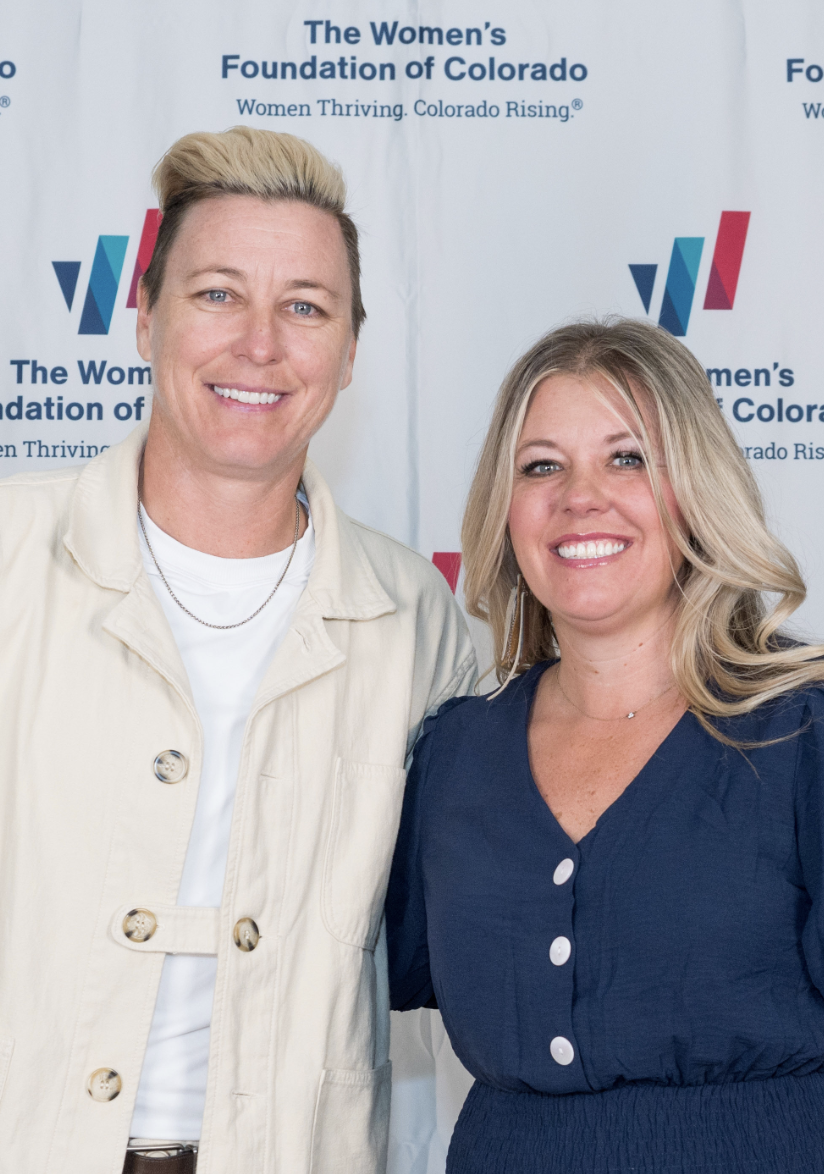
Host of The 5280 Pitch | Former 850 KOA Broadcaster | Colorado Native
Kate Hanson is a veteran sports broadcaster and the voice behind The 5280 Pitch, Denver's home for Summit FC and NWSL coverage. With years of experience at 850 KOA—Denver's premier sports radio station—Kate brings professional broadcasting chops and deep Colorado sports knowledge to women's soccer coverage.
As a Colorado native and lifelong soccer fan, Kate covers Denver Summit FC's inaugural season with the same depth and analysis she brought to Denver's other professional teams. Her style is direct, energetic, and unapologetically passionate about treating women's soccer with the respect it deserves.
What Kate Talks About:
-Denver Summit FC's expansion season and NWSL growth
-Tactical breakdowns, player profiles, and match analysis
-The altitude advantage and what makes Centennial Stadium unique
-Building community around women's professional sports in Denver
-Colorado soccer culture and the youth development pipeline
-Women's sports media and broadcast coverage
Kate's broadcast background at 850 KOA gives her a unique perspective on how women's soccer fits into Denver's sports landscape—and why this moment matters for the city and the league.
Available for:
-Podcast guest appearances
-Panel discussions on women's sports media and broadcasting
-Denver sports commentary and NWSL analysis
-Soccer culture and community-building conversations
Contact: 5280pitch@gmail.com
When she's not behind the mic, Kate is usually at a pitc…