Megan Reid Interview: Why Denver Summit FC, Firefighting, and Walking Away (BONUS)



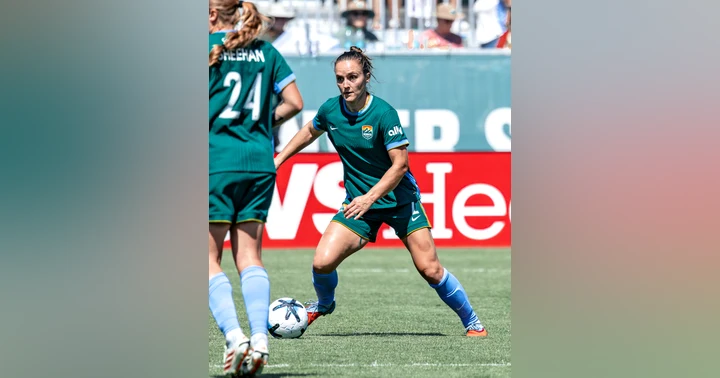
Denver Summit FC center back Megan Reid stepped away from soccer for four years before she ever played an NWSL minute.
Before Denver, before Angel City, before the Canadian national team, Meg was a firefighter and paramedic. In this conversation she tells me why she walked away after her senior year at Virginia, what four years in fire and EMS taught her that soccer never could, and the one conversation at a firehouse table that sent her back to the game.
It's a road with almost no shortcuts in it. A late college commitment. Getting cut in preseason. A phone call that came while she was about to pack up her car and go home. She also shares a connection to one of her current Denver Summit teammates that I had no idea about.
If you think every pro got here on a straight line, this episode will change your mind.
Follow @5280pitch on Instagram, Threads and Facebook.
Newsletter and blog: https://5280pitch.com
Kate Hanson: welcome back to the 5280 pitch, women's soccer altitude. I'm Kate Hansen, and today I am joined by Denver Summit defender Megan Reid if you've been watching this season, You know Meg as one of our center backs, nine starts and when she starts, we've kept four of our six clean sheets. But folks, the road she took to get here, I don't think that a lot of people know it. So this is one of the reasons why I'm so excited for this conversation. And it Meg Story is one of my favorite stories on this roster. So Megan, thank you so much for joining me on the fifty two eighty pitch today.
Megan: Thank you so much for having me. I'm excited to be here.
Kate Hanson: Well, so you grew up in California. What did soccer look like for you as a kid? Who got you into it?
Megan: Honestly, my sister grew up playing soccer, so and she's five and a half years older than me. and then I had an older brother too that was two years older. So basically any sport that they played, I was like, Yes, I wanna play that. so my sister was like very into
Kate Hanson: Ha ha.
Megan: soccer, very into basketball. So naturally those are two things that I I picked up and I would go to all of our trainings or go to the games on the weekend. And both my parents were both like extremely athletic, sporty people that like really wanted all of us to kind of engage with sports. so I definitely started from like a very young age. I think like my first soccer team I must have been like four or five years old. and just like never stopped playing since then. minus A brief a brief hiatus, but I think we'll get to that later then.
Kate Hanson: Well and and I know, you know, it's it's interesting because I've got two girls and it's similar with my younger daughter. She typically does all the things that my older daughter does. like right now she's doing soccer and softball and she does swim and all the things. when
Megan: Yeah.
Kate Hanson: did when did you decide that soccer was gonna be your main sport? I know you mentioned soccer and basketball and those luckily are t you know, different seasons for the most part. Everything's year round these days, but but when
Megan: Yeah.
Kate Hanson: did you decide like Yeah, soccer's the one I wanna stick with.
Megan: Well, that was like that I feel like that's also a really like another very unique part of my story is in high school I actually played vo four varsity sports. I doubled up soccer and basketball in the winter and then ran track in the spring and played water polo in the fall. in California being California like no Yep.
Kate Hanson: Water polo? Hoy, wait, wait, wait, wait. Water polo? That's crazy. I never hear about anyone playing water polo. How'd you get into water polo?
Megan: Yeah. honestly I think it was like one of my really good friends, Erin, was trying it out and she was like, Come on, like you can like you played baseball growing up, you can throw a ball and you can swim, obviously, because I grew up swimming every summer, like for like a wreck like swim league in our area. And
Kate Hanson: Yeah. Sw summer s yeah, swim team, yeah.
Megan: Yeah, and it was just like the thing to do in California. You always basically everyone's on a swim team in summer. and so she was like, You can do both, like why don't you just come with me and play water polo? And I was like, All right, like sure, let's give it a shot and played for a couple of years and ended up playing playing in high school and I ended up being decent at it. so it it took me a minute to let go of just because like I feel like when you're in the the high school realm now, like when you get offers for college, you're like, like this maybe this is what I should be doing. and like, how can I save money? How can I get the best education? Like kind of doing all of those and and so it took me a minute to let go of water polo. But by far probably the hardest sport I have ever played in my life. So
Kate Hanson: yeah. I mean that water polo, such a hard sport. And th this is one of the reasons why I like the Olympics too. Like it there's some of these sports where I'm like, I wonder how people get into water polo or
Megan: Yes.
Kate Hanson: the luge or anything like that. So you pl you
Megan: Yeah. Yeah. So I had a very wrap that way to get into soccer. So like I think I played four
Kate Hanson: Yeah.
Megan: sports my freshman sophomore year. And then I I think I transferred over to like just soccer and basketball. like kind of my junior senior year. and at the time I was still I loved basketball. I was playing alongside Sabrina Ionescu, like if you haven't heard of her, one of the top WNBA players in the world. Like she is just phenomenal.
Kate Hanson: Yeah.
Megan: When you have a team that was structured with players like that, it was so much fun to be a part of that. So like in my mind I was like I'm gonna play basketball. But little did I know I was probably a little too short to be. Anything extremely competitive.
Kate Hanson: Yeah.
Megan: and then I think our team took a trip to like Sweden and Denmark and and that, like going into my senior year was kind of like, wow, like I love soccer. That was like my light bulb moment, which I feel like is very rare, 'cause I think kids get that very young like at a young age. so I really didn't get that till going into my senior year.
Kate Hanson: Mm-hmm.
Megan: And then to get to college like that, that's how I ended up getting to college. I didn't even commit till March of my senior year. senior year. So kind of a
Kate Hanson: wow.
Megan: very delayed process in all of that.
Kate Hanson: Yeah, and it's it's a very different, I feel, story than what you typically hear these days with girl women playing soccer. It's like, well, I knew when I was twelve or when I made the decision when I was, you know, ten that this would I was just gonna do soccer. I loved soccer the most and I I played soccer, softball, I played basketball, I didn't play after my sophomore year. I also did golf. I did all the things. and then I played softball in college. after my my my junior year, that's when I made the decision to go all in just on softball and not but I I think that that's kind of rare these days and go making the decision to play collegiate soccer after, March of your senior year of high school, that's just that that's that's kinda late to the game and you you moved all the way across the country.
Megan: Very
Kate Hanson: went to Virginia. I mean, I was gonna say how was it moving up to the other side of the country, but I mean if you're playing games in Sweden and everything, it probably was no big deal, right?
Megan: No, I I really enjoyed it and luckily like I think the team environment that Steve Swanson sets at UVA and I I think like as I kind of joined the program there's a very unique kind of fourth year class. It was like the Morgan Bryans, Danielle Calaprico, like Emily Sonnet. Like Kristen McNabb, literally all these names that you're hearing in the league now, those were our first and third year class. So it's like very high standards, but also they're just like so welcoming and let me teach you. and for me, like that was so important because I was actually when I entered into college, I was a I was a center forward. I was a nine.
Kate Hanson: my.
Megan: and I got yeah, when I got there, our our head coach was basically Steve was just like, How do you feel about outside back? So I ended up playing two seasons at outside back. I think one season I actually had the highest assist rate because I was like, I know how to go forward, but I don't know how to defend. so it took
Kate Hanson: Yeah.
Megan: me like two years to kind of get into a groove. Okay, how do I one v one defend? How do I move my feet? And then for my final two years, I kinda slid into the center back position once Emily Sonnet left and Kristen McNabb left and some of those names, like they're like, Well, we need you here now and and that's how I've basically ended up becoming a center back and I was like, So basically if I'm doing the math correctly, this is my seventh year in my life playing center back. So
Kate Hanson: Yeah. I mean, i it that's it's crazy to me because one thing that I've learned about a lot of the professional players is you you all have kind of played some other position at some point. And I think that it probably helped you like, okay, well, just I was reading an article the other day about John Elway and he was the GM for the Broncos for a a number of years here in Denver and One of the things he couldn't do is draft a decent quarterback. I mean, we all remember that he passed on Josh Allen and and and that was one of the problems. He could build these great defenses, but he couldn't draft the quarterback. And it's probably because he was when he played quarterback, he was always watching the d the the defenses. He was learning how what defenders were really good. And I think that that's probably played a little bit into some of like why you're so good at center back is because you've played strike or you were the nine and so you know how to make those adjustments and stuff. Do you think that that maybe played into some of your what took you to that next step of being one of the better center backs in the league?
Megan: Yeah, I mean I I actually think I pulled from a lot of different sports to be able to kind of fit into the center back role. but a hundred percent I think playing almost on the opposite side, right? Like coming as a nine, I'm like, how would I want to move in this situation? What space would I want to create? and then for basketball, right? You one v one defend all the time and in a much smaller space, like you have to be quicker. granted you can I mean it's pretty similar in terms of physicality, how much you can or can't use your hands. so just
Kate Hanson: Mm-hmm.
Megan: like anticipating movements, things like that, like okay, where where can I force this player to go? and where is my cover? And
Kate Hanson: Yeah.
Megan: so it's like I always had little bits and pieces of that, but it was just like putting it into a bigger space than in soccer. And so once I figured out how to take my
Kate Hanson: Mm.
Megan: one v one defending from basketball to soccer, it actually became like one of my like strengths within the game because I was like, I actually just have to move like I did in basketball. Like this is all I have to do. And it it ended up helping so much. It's like or vision, right? Like basketball there's so much like tighter channels that you're playing within. And so it's like how do I get this ball to that place or how do I cut off this angle in like a bigger space. So I was
Kate Hanson: Yeah. Mm-hmm.
Megan: pulling all different things from different sports to be able to kind of maneuver around and be versatile within the game.
Kate Hanson: In and you when you played at Virginia you actually scored the the game winning goal. Do you can ta walk us through that that that day when you were s when you scored the game winning goal for for your college team?
Megan: That exact play I got a concussion. Yeah, one of the players swung her elbows and hit me in the head. Like she knew she couldn't get me and she literally just like swung her elbow, hit me in the temple. And I remember going scoring and then after that game I was like, I don't feel right and then ended up sleeping like we were busing home from or we had like a long bus ride I think and I I think I ended up sleeping a decent bit. So but like I honestly I don't remember much of it other than sliding to the ground to be able to get like a toe poke on it. because that was like I would say it was because of the concussion, but like at this point I think it was nearly how long ago now? I was like
Kate Hanson: Yeah.
Megan: I only scored twice in college. I literally had a half field volley in
Kate Hanson: Yeah.
Megan: that one. And like the like
Kate Hanson: Yep.
Megan: I wow, I honestly forgot that I scored against West Virginia in that manner. I was like, What do you mean a game winner? The only one I remember is kicking it in from half field on accident. On experience. So
Kate Hanson: F folks, concussions are no joke.
Megan: No, they're not. Do not mess with that.
Kate Hanson: when you were playing when you were playing, I mean like you like you said before, you're a varsity athlete all through high school. You w ended up playing collegiate soccer, which is a dream for so many players, is just to get to the the collegiate level and then you decided to walk away from the game after your senior year and you skipped the twenty eighteen draft. Can you you're One of the b biggest reasons was because your dad passed. Can you take us
Megan: Mm-hmm.
Kate Hanson: through kind of what that experience was like for you and I'm sure you worked so hard, you were an athlete your whole life and then to to get so far and then make the decision to to walk away, that had to be really hard on you. Can you just take us through that decision?
Megan: Yeah, I mean he passed March of my like kind of junior year going into senior year. and it was like kinda right after spring break and I like I I haven't said anything like in terms of I used to really want to go to the like go into the military and so one of the main conversations we were having like kinda when I was home over spring break was like I don't think I was getting my degree in politics. but I was like can I use this in the military? And so like we were having all these deep conversations about where I wanted my future to go. And my dad was very my dad and I were very close and like very much tied together at the hip when it came to sports. he drove me to every training he could or like like he was a single dad. So like he arranged all my carpools, made sure I got there, made sure I got to every tournament, like was that person well he was afraid to fly, so like when we'd go to Oregon, he would drive the whole way. Like he was very much like I I was just co-pilot and we spent years and years and years doing that together. and so when he passed in that march and you know, like I I was leaning on him for so much at that like moment about like where where am I pointing my arrow of my life and to have him go I like I basically lost all direction. and like at that point I could hear him in my ear being like you committed to playing soccer so like you were gonna finish out your season you're gonna finish out your commitment like that that is who you are that is who I've raised you to be and to be fair like I wasn't in the best headspace I was just looking for something to hold on to And so he had actually pointed me in the direction of fire and EMS. right before he passed. And so I actually found more of like my happy space going and doing that because it completely allowed me to turn off my brain and stop thinking about everything else that was going on and just learning a new skill set like from scratch of like this is how you like use a fire hydrant or this is what this tool is and this is how you use it. And so like all those like little nitty gritty things were things that were like bringing me back to life one step at a time where like he was very much involved with me, like having made helped me make that decision. and so soccer was kinda like slowly more and more and more drifting off into the back burner for me. like I loved it but it was just like it wasn't the same without him I know it sounds weird, but like without him critiquing every performance or you know what I like, like could you have done this or that or like I thought you did this well, but like he was very much one of those guys that would be like, Hey, if you scored three goals but you left one on the table, he's gonna tell you about it. so it was like really weird not to have those conversations with him and And so like for me like that was just such a hit and I was like going through a pretty like depressed time for for me and so fire was the thing that made me happy. So I really just dove head first into that and to and then into EMS as well. So when I graduated I definitely kinda went down that that rabbit hole and got like I got my Firefighter One, my EMT basic, came home, started working in a hospital for like a year out of San Francisco, spent a year there as like a ER tech. And then when I was there I like, my gosh, I love I love like the medical side of things and so got my paramedic and then when I was at my like paramedic internship at this fire department up in Sonoma, the fire captain, his name's Ted, like amazing guy and he literally I remember sitting down with him at the table 'cause we had always played like at bay soccer. And 'cause he loved it. And so we're sitting there and he was like, What do you like what I basically asked him, What you think I should do? Because at the end of this internship they're ready to offer me a job. Like or to at least put me on like a very short list to become a hired firefighter, which was like at that point my dream. And I
Kate Hanson: Yeah.
Megan: was like, do I have an opportunity to go back and play potentially, like go play in the WPSL and go like abroad to Denmark? And he was like, do it. He's like fire and EMS will always be here. You can always re-up your certifications. Doesn't matter, but like what you're doing right now has a shelf life. Like if you if you go to do this, like that has a shelf life. And so I dove into Denmark and
Kate Hanson: Hm.
Megan: WPSL and ended up when I was in Denmark, I got a phone call from Steve at EVA that was like, Hey, I got you a like trial period at San Diego. And at that point my my love of the game really just came back. 'Cause like when my dad died, like my love of the game pretty much died with him. And so I like it was one of those like codependent things where it was like it was so tightly interwound with him that I couldn't unwind it by myself. And so that like four year gap of stepping away and then coming back to it was truly what like revitalize my love of the game. and so yeah, and then I ended up in San Diego and loved it. And then LA and now here.
Kate Hanson: Y well and I I I I was gonna say it's w there's so many things I wanna talk about here and and because the first one I wanna talk about is I know but it's
Megan: I know, I kinda went on a real
Kate Hanson: so good because I was just thinking about what I do with with like I said softball was the thing that I ended up choosing and my dad and I we he was my my coach for a number of years until I got up to sixteen U and Those are some of the best memories that I have. And of course, like I remember driving all over, you know, to all these states and all these tournaments. We always had to listen to talk radio in the car, but
Megan: Yep.
Kate Hanson: it was because of that, you know, it ended up making me want to become a sports broadcaster because I listened to all the talk radio and all everything. It's it there's some things that you just associate with them so much with a parent and then that parent passes. You know, it's it really mi can change how you feel about s you know, the entire sport or or what, you that close relationship was. So thank you for sharing that story. I I hope that it really connected with somebody that needed to hear it and there's there's so much that you said. I think that when you went to EMT and firefighting, what do you think that that taught you that soccer never actually could teach you.
Megan: I think there is a don't want to say a problem, 'cause I don't think it's a problem, but when you're in this world, you're in this world. And it is all mind and body consuming, whether that be like physically running or that's like the mental like strain it puts on you to be able to handle the ups and downs of the sport, the pressure, like all those types of things. And I think for me one of the things EMS taught me is like, yes, like there's so much stress and and like hardship when you're working those jobs one hundred percent, but it really puts it into perspective, right? I'm like, I lost a soccer game or I I had a bad day at training, or like you know what I mean, and I'm sitting there and it's like I've been sitting next to someone on their worst day possible. And it's like when you when you compare them side by side, you're like, Wow, like I need to step back from where I'm at and remember where I came from because like the world is so much the world has so much more that's going on than what is just within your realm. But you know, I think a lot of the time you end up just kind of scrambling about when you're here and so consumed by everything that's that's feeding into it. And so I think for me like having that perspective from Fire and EMS that like there is a much bigger world out there, there are much bigger bigger problems. There are people going through a hell of a lot worse than you or I for starting, for not starting, for having a good day, for having a bad day. Like the that really doesn't matter in the grand scheme of things and like your health, your happiness, like is that's your prime commodity. So
Kate Hanson: glad that you know you you were able to re rekindle your love of soccer and you know step away and and then have the opportunity to come back. Like you said, four years that again I feel like that's not an easy thing to step away for you know from tr all the trainings and all of the you know the games and all of the the train you know the coaching sessions and all the film session all the things that go into making it at the pro level and you you like you said you you got a try out at San Diego and then you went to Angel City and you were a part of their inaugural squad as well. what did you did you feel like when you got accepted to play for for Angel City, did you feel like you had something to prove to everybody since you had been away and that you, had this new outlook on on your c soccer career?
Megan: Honestly, like no, I I don't I don't think I ever really felt like I had something to prove. it was more along the lines of I'm gonna be honest, like 'cause I got dropped by San Diego right after like month three or four of preseason.
Kate Hanson: Mm.
Megan: One of the first questions I asked Casey was like, Do I have what it takes to be in this league or should I just go home? And she was like, No, like I I think you can play in this league. I just like Basically we just we just don't have the numbers for you and like I don't think you're quite what we're looking for. And I was like, Great. Okay, like that's feedback I can take and And I I was literally about to pack up my car and go home and that's when Steve called me and he goes, I actually like I talked with LA. They're down. I think they have only had like one defender left. Like there's so many injuries within their preseason. Sarah Gordon going down with an ACL, MA Vignolia going down with her labrum tear, like I think there was a heel problem. There's like so much stuff going on within the back line to the point where like they didn't have enough players. And so that's kind of how I got my foot in the door there. And I think for better or worse, like Do I think I was at my best when playing there? Like to your point, like I hadn't been training. Like I was extremely fit because like I I I didn't know how to turn off that like I'm gonna go do an interval. I'm gonna go
Kate Hanson: You're training a different way.
Megan: I didn't know how to turn that off. So I really was actually training like an athlete without actually having a team to compete for. But like I I just wasn't getting touches on the ball. So that was probably where I was falling short. And then I think I kinda got most of the rust off just being with San Diego in that window. And then when I stepped into LA, I remember having to to scrimmage San Diego three days later after I arrived in LA and had to play a ninety minute game in Chula Vista and that was like where Christen Press scored her first goal, like for the team technically. and so it was It was kind of a whirlwind and then as I got to LA, like, I I really wasn't expecting I just wanted to be a part of a team. And what actually drew me to come back was looking at everything that was going on within the league, and how much it was growing and how much it was really just pushing the envelope on women's sports, like that was something that I wanted to be a part of. Like I loved it again and I was like, let me see if I can be a part of like kind of pushing this bar and raising a new standard for what young girls can step into when I'm done. 'cause the players before me, like they were they were the one that went through and made I th that was the year of like the CBA, like the first and tried and true CBA. And so that like I just wanted to be a part of that. And so I I wasn't thinking I have something to prove, I need to be the best player on the team. Like I was like, I just want to be a part of it. I wanna be able to write my
Kate Hanson: Yeah.
Megan: name at the bottom of this page and say, I helped to create a better environment for women's sports and a better place for young players to step into because like for for a while at when I was home I was coaching as well and I was looking at and
Kate Hanson: Yeah.
Megan: so I don't know if you know this, but I coached Natalie Means when she was in high school. so we're from the same town.
Kate Hanson: I did not know that.
Megan: Yeah. So like it was players like Nat that like I was like, dang, like I really want to come back and like maybe push to see what I can help create for them. And so it's like it's so cool now for her to step in and Like she didn't have to go through anything that I had to go through for the most part. But at the same time, I didn't even have to go through half the stuff that like Abby's gone through. And so it's like it's so cool to see like how each building block, that each player has laid before you that
Kate Hanson: Mm-hmm.
Megan: like just really helps pave the way. And so it's like funny when we tell stories or Abby tells stories and I'm like, What? And then like if I tell a story and the young girls are like, What? Like, no way. So
Kate Hanson: Are you?
Megan: Yeah, I just I really didn't have expectations. That's the long winded way to say it. I just wanted to be a part of it.
Kate Hanson: Is that what drew you to coming to sign with Denver? Because you know, you you're here through twenty twenty eight and I mean that's it's another expansion team. What drew you to Denver?
Megan: I mean I think it it was a it was a mixed bag of things and I think it was really cool to see what the team was putting together in so quickly. and coming from like another expansion team like that was trying their hardest to get everything for the players, it still took what was it three years before we got our like training facility, three or four years. And so like I'm looking at here and it's like I was here for six months and we've got one of the state of the art facilities like in that that's insane to me. so it just shows how invested this ownership group is. And so like that that was something that really drew me to the team was that how how quickly they were like putting things together and in like truly showing their investment in women's sports and I like, Wow, that's so powerful. But then on top of it, my sister's been here for ten years. she's got her first son and I was just like, it would be it would be so nice to be near family 'cause for so long, like I I was always kind of doing my own thing in different places and feel like I was missing out on some you know on like bridal showers or you know baby shower like that type of thing I was missing out on and I was like okay if I'm at least near my sister maybe I can go help out with my nephew every once in a while and just really create I think what players don't focus on enough sometimes is like outside happiness. And so I think when you can form like a really unique community outside of soccer it almost helps to translate on the pitch. You play free or you We play happier, like and all those things kind of just help to like level you up. And so that was like one of my goals by coming here is to be close by family and to build that network. And I feel like I had the means to do so being here. And so that was that was the other really big draw. So like there is I'm sure there's a lot more that falls into that, but those were like the two main categories for me was that you know I can see this as home and it's and And it's a place where I get to be a part of my family and a part of this incredible new expansion side.
Kate Hanson: Yeah, and kind of creating a culture and for for the next generation, I've talked with a lot of the veterans, you know, Kaylee and Abby and what that was one of the things that drew the all of them to coming here is setting setting the culture for teams to come. You know, like this is the way that the Denver Summit culture is, this is the way we train here, this is our mentality here, and that's what you know, they really wanted to instill from year one. And I think it shows. I mean th the the way that the way that you guys play is not like an expansion team. It's it's a w it it feels like there's a level of leadership that you typically don't see. Everyone's bought in from the first whistle. and I think that that's just because there's a lot of really strong leaders that want to continue growing the game and be those mentors for the the next you know, for the rookies. I I had no idea that you coach Natalie Means. do you ever
Megan: Yeah.
Kate Hanson: find yourself like starting to like go into coaching mode with her again or anything?
Megan: Not really, no. I mean like when we're when we when we play together though it like it helps. Like I I actually I understand what she wants for the most part and vice versa. And yeah, like I When I was your coach, I I w used to always joke, I like, Yeah, you guys wouldn't want to play with me, like I'm pretty intense
Kate Hanson: Yeah.
Megan: with play, but like Nat's one of those players that just like seamlessly fits in and I know you're you're talking a lot about how the vets have like really helped shape this culture, but like I don't think that comes together without having the youth like the younger players that we have. Like if you don't have players that are humble come in ready to work and like like you look at players like Devin Lynch and Natalie Means who have played significant minutes and it's like those players came in with confidence but like took everything in stride, just like soaked everything up like sponges. And like you look at like Olivia now too, like she's she came in and had two great performances back to back and like scoring goals that were important for us, like and really just starting those steps towards like advancing the team to be in a better spot within the table. And it's like when you have young players that are receptive, are ready for the challenge, that like take criticism in stride but also like are like boosted by the vets like I I there's there's nothing that can beat that. because from top to bottom then you just have like this indestructible team. and so like yeah we can tip our hats to the vet, but if there's no one to listen and to follow through on that culture it doesn't really mean anything, does it? So like I think this team is a is pretty darn cool from top to bottom.
Kate Hanson: Well, this has been an awesome conversation. I could talk to you for hours. You have like I said, this is one of the stories that I I have wanted to to have to share with the listeners for a while now, so I'm so glad that we were able to make today's conversation happen. What one final question from me and then I'm gonna let you go. But as this inaugural year wraps up, what what are your thoughts on it? Like let I mean it's I know that there's still games to be played, but as
Megan: Yeah.
Kate Hanson: it wraps up, what do you feel sums up this first year?
Megan: I think for me like success is not linear. and I think this team has has learned that, but like I I think what truly sums up this year is like the grit of this team through those ups and downs. there's always this like fierce determination, no matter a win, a loss. Like when players step into the environment, like it is it is clear that every single drill players want to win. And it's like and that's how you create a winning culture is like having players that want to bring that every single day. And so regardless of how this year turns out, I think the culture that's being set here amongst the players, and the standards that are being set, I think all of that is in the right direction and it's it's something that like I'm very excited about. and it it really I think each player pushes one another to be better every single day. a and I think that's a really cool thing to be a part of.
Kate Hanson: Well, like I said, this this has been a great conversation. I'd love to have you back on the show again someday. You've got so many great things to say and I think that it's it's not always the same path for everybody to to make it to this level. sometimes it's it's like you just said, it's not linear. So Megan Reid thank you again so much for joining me on the fifty two eighty pitch today. I so appreciate you spending the time with us.
Megan: Yeah, thanks for having me. It's been a blast.