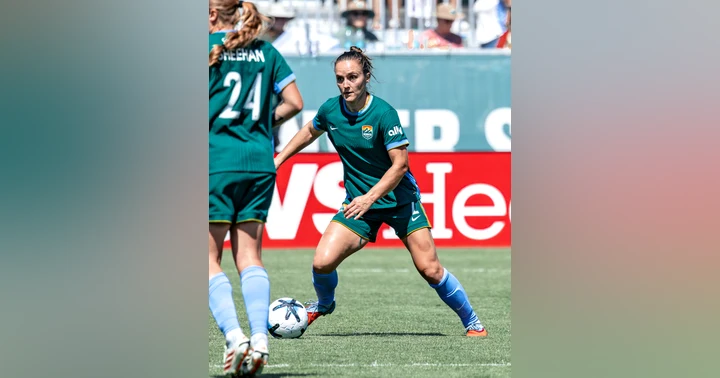
Denver Summit Report Card: Nick Cushing on Year One in Denver
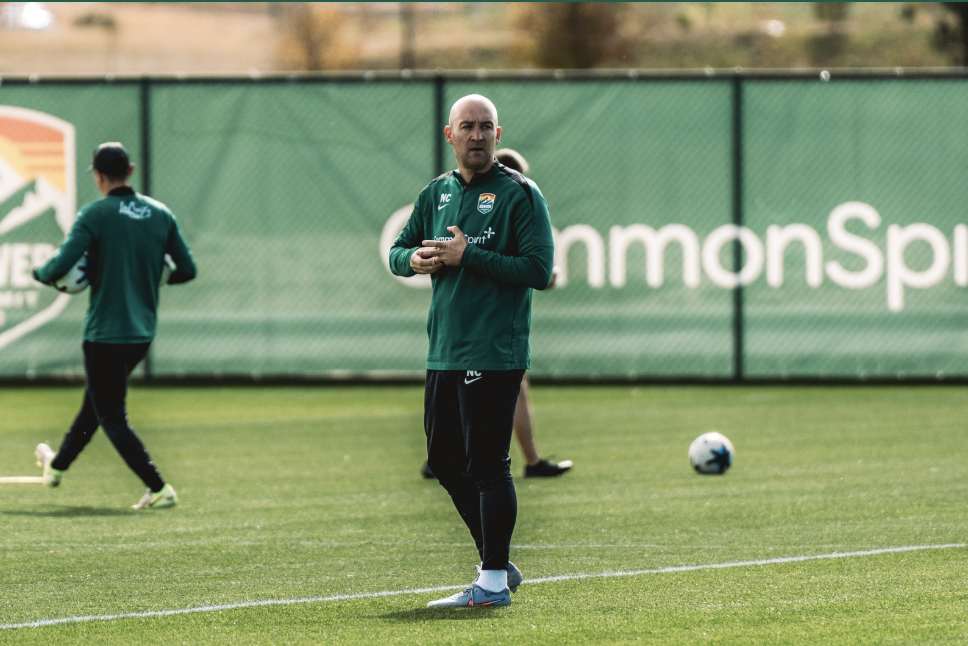
Photo courtesy @victorgraphy_20
Asked to grade Denver Summit FC's inaugural season, Nick Cushing reached for the English system first.
"In the UK, we have like A, B, C, D, and C is the minimum as a pass," he said. "So I think I'd give it a C. C+, in the sense of, I'd say it's a pass. But I think a B or an A is far too positive for 10th."
That's a hard grade for a team that leads the NWSL with 53 goals through 29 games. Denver goes into Sunday's Decision Day at North Carolina still alive for the last playoff spot. Cushing insisted he didn't mean it as a knock.
"I don't mean that to sound negative, because I think we've done incredible work," he said. "The bare minimum of this year was to put a foundation in that we can build off next year. I think too many times in expansion you see the second year is like a brand new year, because you make so many mistakes in the first year that you just scrap that year and you repeat. I don't think that's the case for us."
He also knows what's keeping it from a B. "Too many winning leads lost. Too many goals in transition and counterattack. Probably not enough goals in set play," Cushing said. "We probably could plan our preseason now."
The man grading it never played professionally. He started out coaching young grassroots players. Manchester City handed him its women's team in 2013, when he was 28, ahead of the club's first season in the Women's Super League. In 2016, City won the league without losing a game.
"You don't choose to be an Evertonian, you're chosen"
Cushing grew up in Chester, not far from Goodison Park. His father had been an Everton season-ticket holder through his own childhood. As soon as Nick was three, his dad started taking him. His older brother, Martin, was into a lot of different sports. Nick only wanted football.
Supporting anyone else was never an option. "As Evertonians, we always say you don't choose to be an Evertonian, you're chosen," he said. "And that definitely was the case for me."
Those weren't great years to be chosen. Everton spent much of his early childhood fighting relegation. He did get to the 1995 FA Cup final at the old Wembley.
He played central midfield in grassroots football from 7 or 8. He was honest about how far that was going to go.
"I was never blessed with the physical ability to be able to dominate games, in the sense of my running or my pace or power," Cushing said. "So I had to play with my brain a lot, and had to try and figure out solutions and solve problems with the way that I saw the game. And probably that side of not being physically incredible was probably my first route into coaching, because I was always trying to work out the game."
By 16 or 17 he was coaching younger players. As a young adult he coached at the Vauxhall Motors academy near his house, where a lot of boys released by the big Merseyside and Manchester clubs ended up. Then someone from Manchester City asked him to come coach there.
What hooked him at first had nothing to do with tactics. "Seeing the players come running onto the field and wanting to just play and learn and get better," he said. "That was initially probably what hooked me on coaching."
His first coaching obsession was Jose Mourinho. He watched Mourinho arrive at Chelsea and became "super obsessed" with how he held a room and a press conference. Then he studied Pep Guardiola's Barcelona like everyone else did, then worked closely with Guardiola once he came to Manchester City. "Everybody read the books and everybody watched the documentaries," Cushing said.
He doesn't make much of the jump from coaching boys to women. At Manchester City, with players like Jill Scott and Steph Houghton, he said, "I didn't go at it in the sense of trying to figure out what the differences were." The bigger adjustment came when he moved to New York City FC in MLS in 2020 as an assistant, then head coach. There he had a locker room full of languages and a league that was "very physical and very transitional." Moving to the NWSL meant learning another league again.
"In NWSL, everybody attacks everybody, and the spaces are a lot bigger. The transitions are a lot more frequent," Cushing said. "As a coach, you have to almost enjoy joining the party. You can't control it. You have to embrace it."
"You have to have Wayne Rooney in your team"
After New York, Cushing and his wife decided England would be home. He turned down another NWSL job. Then Denver called.
The first person he talked to was Rob Cohen, the club's primary owner. On his visit, the Summit banners were already up around town. Cohen showed him a grass field where the CommonSpirit Performance Center now stands.
He compared the feel to Columbus and Cincinnati, MLS clubs with "incredible energy in their stadiums," where it's hard to play as the visitor. In New York, he said, it was difficult to have a presence next to the Yankees, the Giants and the Knicks.
"I felt like that was what was going to happen here, and that's something that I really wanted to be part of," Cushing said. "For me, to get the best out of me, I need hungry, ambitious people around me. I need energy."
He also hadn't known how much women's soccer Colorado plays. His eight years of success at Manchester City were built on English players, he said, and he wanted the same kind of glue in Denver.
"In England, it's really critical that you have homegrown players. If you're the Everton team, you have to have Wayne Rooney in your team, because it's just the way that you really connect the fans with your group," he said. "Yeah, we all want the world's best players. But when you can relate to somebody that's from not far away from you, that is doing what you or your children want to do, I think it becomes really special."
So Denver went after Janine Sonis of Highlands Ranch, Ally Brazier of Colorado Springs and Lindsey Heaps of Golden, formerly Lindsey Horan, and brought in Jordan Baggett. Add altitude, which lets the Summit push the intensity, and a crowd behind them every week, and Cushing says "all of those things just make my job a little bit easier."
The rest of the roster was built in three groups. First came established NWSL players who had won before and knew the league, like Kaleigh Kurtz and Abby Smith. Then came "the next best players," the rookies Denver wanted to develop itself, like Natalie Means, Devin Lynch, Una McCormack and Olivia Thomas. Last were world-class players who could be the difference, which meant waiting until June for Heaps.
All of them had to be good people, too. "Our fans and our supporters deserve not only to have good football players, but good role models for the next generation of Colorado soccer," he said.
He isn't done. "I think the reality is we feel like we've had a successful season, but I mean, we're in 10th, right?" Cushing said. "We want to be in four, three, two, one. And I think the quickest way to do that is to bring in world-class talent."
"They challenge you just as much as you challenge them"
Cushing has coached Sonis before. In 2018 at Manchester City she was physically the same player she is now, he said, but she was a winger.
A lot happened in between. "She won a gold medal for Canada, right? She missed a penalty for Canada in the tournament. She had an injury. She went and played in Portland. She then went and got the playoffs with Louisville as the captain," he said. "So she's just embraced all of these experiences and continued to work hard and continued to stay humble and honest."
This is only her second full season as a fullback. She still wants to get better at containing wingers and dealing with balls over her head. Cushing thinks she's just getting started. "20 goal involvements from left back is incredible," he said.
He coached Tash Flint in Manchester, too, and what she did in Tampa impressed him. "I knew she had the quality. She's got more quality than, you know, she could play NWSL," he said. He's already setting next year's bar for her. He mentioned the No. 10s who decide games from between the lines, like Manaka Matsukubo during her time at North Carolina and Olivia Moultrie at Portland.
"Can Tash be that? And I believe she can, but the 30 games, that is the test, right?" Cushing said. "Those 30 games are asking you every week, can you be the difference? Can you produce? And for me, the difference between the good and the great is that the great turn up every week and add numbers."
Heaps is his example of the great. She has said Cushing was one of the main reasons she chose Denver. He told her that from June to the end of the year, she should be looking at 10 goals.
"What I love about world-class players, the top, top level of player, is they challenge you just as much as you challenge them," he said. "Their standard is incredibly high, and they don't cut corners, and the byproduct of that is that their consistency is just elite. They seem to just do it effortlessly."
Off the field, Cushing is a music fan. His dad got him into 1970s and '80s rock. He saw John Fogerty at Red Rocks. When his parents visited for the Bay and Seattle games, he took them to see the venue. Now he owes his dad a show there.
Asked what he wants Denver to remember about this first season, he didn't talk about the goals.
"I want them to remember that we played for them. That we embraced the responsibility of playing for Denver, playing for Colorado, playing for the Summit," Cushing said. "We didn't just turn up and play. We didn't just lose. We cared about the losses and we really felt them. We really embraced the wins, and we tried to win well for our fans. And I think what I want them to remember is that together, we're always going to go and attack everybody, and we got to tighten up in that defensive part of the game."
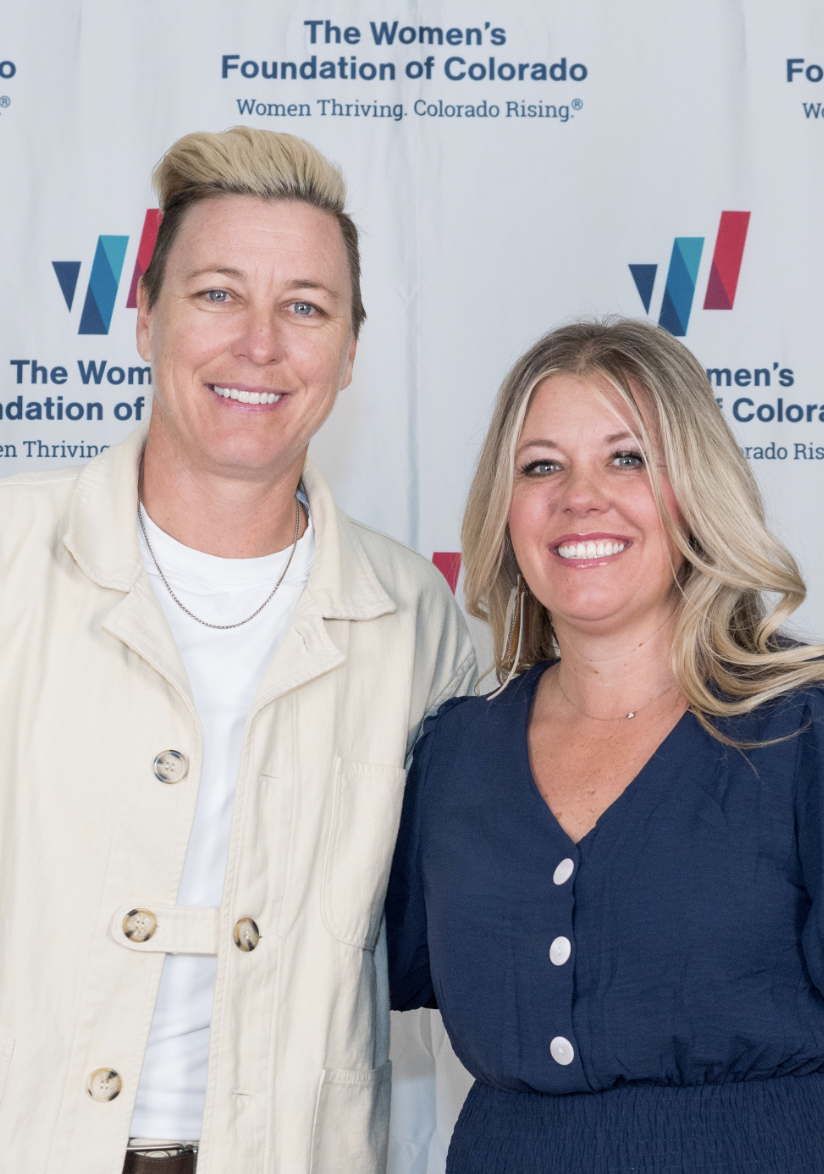
Host of The 5280 Pitch | Former 850 KOA Broadcaster | Colorado Native
Kate Hanson is a former 850 KOA broadcaster and the voice behind The 5280 Pitch, Denver's home for Summit FC and NWSL coverage. With her time at 850 KOA—Denver's premier sports radio station—Kate brings professional broadcasting chops and deep Colorado sports knowledge to women's soccer coverage.
As a Colorado native and lifelong soccer fan, Kate covers Denver Summit FC with the same depth and analysis she brought to Denver's other professional teams. Her style is direct, energetic, and unapologetically passionate about treating women's soccer with the respect it deserves.
What Kate Talks About:
-Denver Summit FC's expansion season and NWSL growth
-Tactical breakdowns, player profiles, and match analysis
-The altitude advantage and what makes Centennial Stadium unique
-Building community around women's professional sports in Denver
-Colorado soccer culture and the youth development pipeline
-Women's sports media and broadcast coverage
Kate's broadcast background at 850 KOA gives her a unique perspective on how women's soccer fits into Denver's sports landscape—and why this moment matters for the city and the league.
Available for:
-Podcast guest appearances
-Panel discussions on women's sports media and broadcasting
-Denver sports commentary and NWSL analysis
-Soccer culture and community-building conversations
Contact: 5280pitch@gmail.com
When she's not behind the mic, Kate is usually at a pitch somewhere in Colorado, cheering o…
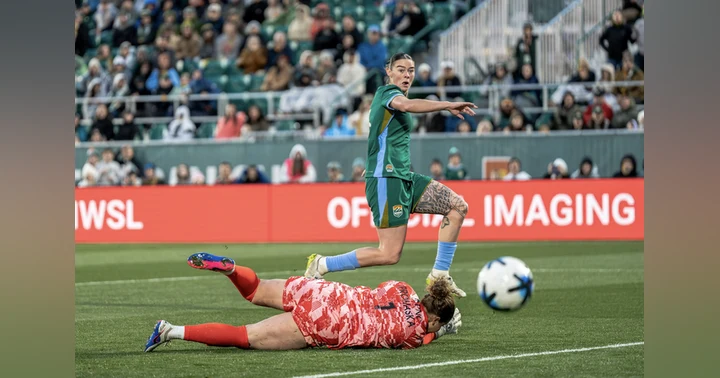
"I finally got it": Kaleigh Kurtz, six goals and a worm in the rain keep Denver Summit FC alive