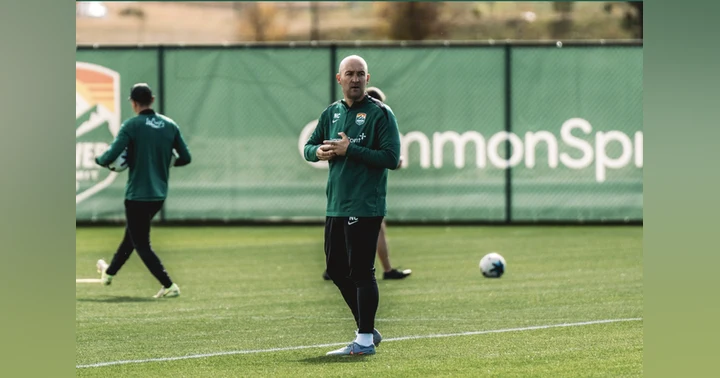
Nick Cushing Interview: Building Denver Summit FC, and Grading Year One


Denver Summit FC head coach Nick Cushing grades our inaugural NWSL season, and he won’t go higher than a C-plus. Before Sunday’s season finale at North Carolina, I sat down with the man who built this team from scratch to find out where he came from and where this club goes next.
Most of you don’t know Nick’s road to Denver. He grew up in Chester, England, and his dad got him an Everton season ticket at three years old. He knew early he wasn’t good enough to play, so he started coaching kids instead. He talks about the coaches who shaped him and about later working alongside Guardiola at Manchester City. He also explains how leading City Women and then coaching in MLS prepared him for a league where, in his words, everybody attacks.
Then we get into Denver. Nick describes the empty grass field he toured before taking the job, and the three-bucket recruiting plan behind this roster. He explains why landing Colorado players mattered so much. He tells me why he thinks Janine’s best years at left back are still ahead of her, and what Tash has to do next season to become the difference-maker he thinks she can be. He also shares the goal number he set for Lindsey Heaps the day she arrived.
And yes, he gives the inaugural season a grade. He names the three things he says have to get fixed before 2027, tells me what he wants you to remember about year one, and describes his very Denver night at Red Rocks.
CHAPTERS
0:00 Intro
1:33 Chester, Everton, and a season ticket at age three
5:08 The coaches who shaped him: Mourinho and Guardiola
7:27 Coaching women, Man City, and moving to MLS
10:04 WSL vs. NWSL: why this league is different
12:19 Why he said yes to Denver
15:52 Altitude, homegrown talent, and the secret weapon
20:14 The three-bucket roster strategy
22:21 Janine at left back
25:31 Tash Flint’s next step
28:06 Coaching Lindsey Heaps
29:39 Grading the inaugural season
32:08 What he wants Denver to remember
33:23 His very Denver moment
If you like this episode, please hit subscribe, leave a review, and share it with somebody. That’s genuinely the biggest thing you can do for an independent show like this, and it’s how more people find women’s soccer.
📱 @5280pitch on Instagram, Threads, and Facebook
🎧 Spotify: https://open.spotify.com/show/6jiBAbW0QXepwdqK0qhaaF
🎧 Apple Podcasts: https://podcasts.apple.com/us/podcast/the-5280-pitch-denver-summit-fc-podcast/id1859060272
🌐 https://www.5280pitch.com
Kate Hanson: Welcome back to the 5280 Pitch Women's Soccer at Altitude. I'm Kate Hansen, today I'm joined by the man who built this team from the ground up, Denver Summit FC head coach Nick Cushing. Okay, so if you've been following the show all season, you know it's been a ride. As Tash told me, this season has been anything but linear. And that's what you would expect in an inaugural season, right? But look at where the Denver Summit have landed. 53 goals, the most in the entire NWSL. And on Sunday, Everything comes down to one game in North Carolina. but folks, the road that Nick took to get here, I don't think that most of you know it. He never played professionally. He started out coaching four and five year olds on Saturday mornings, And at 29, he was handed a brand new team in Manchester City. And he lost his first four games. Two years later, they won the league without losing once. so today we're gonna get to know a little bit more about Nick Cushing, where it all started, what brought him to Colorado. Coaching Janine and Tash for the second time around and our US Women's National team Captain Lindsey Heaps. And of course, we're gonna talk a little bit about what this season means to him and what to expect on Sunday. Nick, welcome to the fifty two eighty pitch.
Nick Cushing: No problem, no problem, looking forward to it.
Kate Hanson: Well, this has been a a conversation I've wanted to have for a while now. And there's a lot of things that I think that people here in Denver might not know about you and hopefully today we'll be able to settle some some of your background, what got you into soccer and and or football, and people will get to know a little bit of the man that's roaming our sidelines here in the Mile High City. So, Nick, you grew up in Chester. Over in the UK, your dad got you your first ever season ticket when you were three years old. Talk to us a little bit about what soccer looked like for you when you were growing up.
Nick Cushing: Yeah, my father has been obsessed with soccer since he was a young boy himself and he was brought up in Evertonia and we're from Chester, which is not far from Goodison Park, which was the Evans Stadium before Hildickinson. he was a season ticket holder all his childhood and teenage years. And soon as I was old enough. for him to take me three years old, he took me and my elder brother, Martin was into a lot of different sports, but I was just very much obsessed with soccer and just football was the sort of sport that I really loved and didn't really get a choice whether I was going to support Everton or not. you know, as Evertonians, we always say like, you don't choose to be an Evertonian, you're chosen. And it's definitely was the case for me. Went to Everton, was obsessed with Everton and We weren't that great through my early childhood years, a lot of fighting relegation and did go to the 1995 FA Cup final at the old Wembley and yeah, just started to play as soon as I could, seven, eight year old, just played grassroots football, was never lucky enough to be blessed with the ability to be a player. So decided really early that I wanted to go into coaching and as a teenager and then as a young adult. just went and coached at Vauxhall Motors, is a semi-professional team near my house where a lot of the players from Everton and Liverpool and Tramia Rovers, Man United and Man City, when they get released, a lot of the boys there play for the Vauxhall Motors Academy and I coached there and yeah, I just got really lucky from somebody from Manchester City asked me to go and coach. So, was obsessed with soccer, but not good enough to be a player.
Kate Hanson: Well, what position did you play when you were when you were growing up? When did you decide all right, that no matter where I am on the pitch, it this it's better for me to be off directing people?
Nick Cushing: Yeah, I was a midfield player, so I played like central midfield, but was never blessed with the physical ability to be able to dominate games in the sense of with my sort of running or with my pace or power. So I had to play with my brain a lot and had to try and figure out solutions and solve problems with the way that I saw the game and how I understood the game. And probably that side of not being physically incredible was probably my first route into coaching because I was always trying to work out the game. And as soon as I got to 16, 17, 18, 19 years old, that was when I started to coach younger players and started to, I really enjoyed coaching. When I got into coaching initially, it was with grassroots young players and I really enjoyed it. And it was sort of my journey into the learning sort of how to be a coach and potentially it being a career.
Kate Hanson: Well, being a coach is is very different than being a player. You like you said, you have to have see the game a little bit differently. Was there a coach growing up where you're like, hey, actually I really like this style of play? I wonder if if I coach someday or with with some of your grassroots coaching that you did, did you try and start implementing different ideas that you had seen from another coach?
Nick Cushing: you know, I was, at first I really enjoyed coaching because it, the energy and the sort of enthusiasm and the, the sort of inspiring part of it, I think was the bit that I really enjoyed, you know, seeing the players come running onto the sort of field and wanting to just play and learn and get better. That was initially probably what sort of hooked me on coaching. I think when I think of coaches and my early obsession in coaching, when Jose Mourinho came to England and sort of landed as the Chelsea coach, that sort of his character and personality and his presence was something that I was like super obsessed with, like watching his press and media and watching the way he influenced everybody, whether it be his players, other players. That was probably the first time that my mind was open to sort of coaching and coaches. I think, you know, everybody and all of us will say that those early Pep Guardiola teams of Barcelona, when they dominated the style of play that they had and the technical sort of element to the way the teams played, that was hugely inspiring for everybody. And everybody read the books and everybody watched the documentaries and the influence that he had on the game and the way the game is played now, I think is evident, right? I was lucky enough later down the line post Bayern Munich when he came to Manchester City to actually work closely with him. So I would say those two were probably the biggest influences on me, but I think there's many, many influences around the world in the sense of different phases of the game, different ways to play the game and also the different presence you can have as a coach to influence your players and to influence your supporters and your organisation. I think that's something that I will forever be fascinated with.
Kate Hanson: Well and I think that one of the things that probably you didn't necessarily think about was the difference between coaching youth and men and women. What would you say is different about coaching women that maybe you didn't anticipate?
Nick Cushing: I get this question asked a lot, people say to me, because I've worked in the men's and the women's game. think ultimately when I took the job at Manchester City Women, I was really, really lucky there that I had some incredible people, the likes of Jill Scott and Steph Horton and KB that's here with me now and Tony Duggan and Izzy Christensen. I think in those early years... I didn't go at it in the sense of trying to figure out what the differences were and how I could potentially work differently in the women's game after being in the boys' academy. I think I just went at it trying to improve the team, trying to coach us, implement a style, trying to blend and balance the different profiles of players and the style and the culture and the environment. think my first probably recognition of difference was when I moved from Manchester City Women to New York in the MLS. There was a lot of different cultures and different, I had a lot of South American players and we had some European players. Whereas my team in Manchester City Women was very English, we had some foreign players in the sense of Tess Woller and Kossara Slani and know, Carly Lloyd came over from America. going into the MLS. and having a lot of different languages and different cultures, that was definitely something that I had to adapt and learn through and had to learn in 2020 when I went there to integrate myself in the sense of how I could be an influence on the players and help develop individuals and help develop the team. The style was very different. The
Kate Hanson: Mm.
Nick Cushing: WSL is... a little bit more tactical and methodical in the way that you play against different teams, whereas MLS was very physical and very transitional. And I think moving from MLS to NWSL was something that, another challenge in the sense of learning a different league, but I think being in the MLS definitely helped me to see clearly how a team can, or how you. effectively coach a team in a Salary Cap league.
Kate Hanson: I'm I'm glad that you brought up coming over and having the different cultures and different backgrounds because when Tash was on the the show, she said that in the UK it's definitely more of a technical game. Whereas over here in NWSL, the game's a lot faster. Everyone everyone on the pitch she says is fast. Do you think that is a bigger learning curve for you as a coach as coming from like the different Cultures and backgrounds, whether it's South America, the UK, US, as opposed to coaching men versus women.
Nick Cushing: I definitely think you have to adapt to the style in the sense of, especially when you're the Manchester City Women's Head Coach, you're going to have a lot of the ball, you're going to have a lot of control in the games. The majority of the opposition are going to sit low and sit compact and try and limit your ability to create chances by controlling the space. Whereas in NWSL, everybody attacks everybody and the spaces are a lot bigger. the transitions are a lot more frequent. the physical, if you ultimately, if you, you can't, if you can't meet the physical demands of the game in NWSL, you're going to really struggle. And that is why I think that the league is incredibly competitive. The league is incredibly exciting. Everybody, anybody can be anybody. You can see that in the results. Small details like the actual expected goals. metric doesn't always reflect the result of the game. Whereas I think if you were to go to WSL and look at that, most often the sort of expected goals metric will reflect the score. It's not necessarily the case in our league just because of the amount of chances and the frequency of chances. So I definitely think you have to adapt to that. And as a coach, have to, what I think is you have to enjoy. almost like enjoy joining the party. You can't control it. You have to embrace it and find an effective way to, one, be good at it, but also try and control the opposition at times. And you can see in our team this year that that has been an element that we have to improve in.
Kate Hanson: Well after MLS, you decided that England was gonna be home, right? You and your wife decided, hey, we're gonna stay over here in the UK and then you actually turned down another coaching opportunity for NWSL, but then then Denver called. So what what was different about taking this position than coming back for a different opportunity here in the US?
Nick Cushing: Yeah, I think I've always been somebody that, when I reflect on my career, when I was in the boys Academy, I didn't strategically try and become the Manchester City women's head coach. It was just an opportunity that I was offered and it was an amazing opportunity and an amazing experience. And the same with MLS. I didn't plan to go to America. CFG owned the team in MLS and I had the opportunity to go there as a development experience being a number two to then be the number one. So I've always been somebody that will, I'm open minded to opportunity and I will always try and explore the opportunity because you just never know that could be the most amazing experience of your life. So this, I didn't feel like the experience previous was the right one for me and my family and When Denver called, the first person I spoke to was Rob Cohen, our primary owner, and he outlined the project and his sort of, his vision for the project and the reasons, what he really valued in building this project. I always thought going around MLS, it was really difficult to have almost a presence in the New York sports culture. huge teams like the Yankees and the Giants
Kate Hanson: Mm-hmm. Yeah.
Nick Cushing: and the Knicks. Whereas in Denver when I visited, the sort of energy for the summit and I went to Larimer and to Larimer Square, all the stuff was up and the banners were up and drove to this spot here where now the Common Spirit Performance Centre is and it was just a grass field and Rob was showing me. And it just felt like... One of the, you when you go around MLS, you go to places like Columbus, Crewe and Cincinnati, and these teams that are having incredible success, but also have incredible energy in their stadiums. And it's incredibly difficult to play there, but the feel that they've got is such a connection with their crowd. And it's almost like surges. I felt like that was what was going to happen here. And that's something that I really wanted to be part of, something special, play a small part in building this real. special environment where the stadium is full, where the team can play really aggressive attacking soccer and where ultimately in the future, know, championships are delivered and it becomes a really unique special place. And the way that Rob and then Kurt subsequently sort of explained the vision, I really felt like it was something where I could add value to. And I've said before, for me, to get the best out of me. I need hungry, ambitious people around me. need energy. And then every day I can sort of get the best out of myself. And I really felt like in May, June of 2025, I really felt like this was going to be a real special, a real special team.
Kate Hanson: I think that that you guys have held up your end of the bargain on making it a special team, and the fans have definitely held up their end of the bargain on being all in for the Denver Summit. I I've said this numerous times on the show. I I don't know what took so long to get an NWSL team here because every time the US Women's National team would come, we would sell out Dick Sporting Goods Park. We have, you know, Janine is from from Highlands Ranch, Lindsay's from here. I mean, just those two on our roster. We have Allie from the Springs. There's a lot of homegrown. talent here in Denver. And so I think that we've been waiting for for the summit for a while. And I'm just I'm so thankful that this team has come out and had the energy that they have had this first season. Like you said, you wanted to have that strong attacking team. And I think that that type of play with being able to train here, that is our secret weapon. If we are coming out and fearing nobody, attacking everybody and training at altitude. That's that is really a huge advantage for the Denver Summit and that home field advantage. How do you think that that's really played into a lot of the team from the first day? I know that a lot of players were saying the altitude and i is real, it's hard to train in, but how do you think now, now that we've had nine months here, you guys have been training in your style of play, is that that secret weapon now?
Nick Cushing: Yeah, think we definitely feel it is. But I think when I came here, I think there's certain elements of what we can have that can become so unique. When I first came here in June, May, June last year, if you look at the team in Manchester City that we were so successful for eight years, we strategically built that with English players because I think... When you want to do something special, you have to have almost an emotional, has to be something really sticky that binds everybody together, that really guides people towards something unique. Everybody wants to win the championship. It's just the way sport is, right? We all chase being in the final and winning the trophy. But I think once Rob explained to me around, you I wasn't that aware of Colorado and Denver being such a hotbed of... women's soccer and young girls playing and to have a core group of players that, like in England, in England when you want, it's really critical in England that you have homegrown players. If you're at the Everton team, you have to Wayne Rooney in your team because
Kate Hanson: Mm-hmm.
Nick Cushing: it's just a way that you really connect the fans with your group. And yeah, we all want the world's best players, but when you can relate to somebody that's from not far away from you that is doing what, you or your children want to do, I think it becomes really special. We strategically wanted Janine and we wanted Ali and we wanted Lindsey and we brought Jordan Baggett in and we brought Jordi Nites in and we brought Meg Bodhi in and that gives you the opportunity and then you couple that with, you play at altitude so you can really push the intensity and you can make it really difficult and then you've put that with the fact that there's so much energy here and enthusiasm from the fans and like you say, Denver was really ready for a professional women's sports team and soccer team. all of those things just make my job a little bit easier. It just gives me a platform to really work from. Then myself as the head coach and leading the staff, we have a huge responsibility to use all of those things to our advantage to make sure that we can play a style of football that is really difficult for everybody else. We also can play at a mile high up, which is incredibly difficult. We've also got 12 and a half thousand every week that are right behind us. And in the future, who knows, we've also got three, four or five incredibly world-class players that we're trying to help bring back here to reinforce and make us even better. I just think that is, like when I say, this is the place to play in NWSL. I really believe that because I think we've got such a unique sort of foundation and platform to work from that. think we can, you we've just got to do the work, right? We've just got to produce what the potential, what the potential that we have.
Kate Hanson: in addition to the Colorado homegrown talent that's on the roster that you listed off, some of the first signings that joined the Denver Summit were veterans. So we're talking Kayleigh Kurtz, Abby Smith, it Janine. I talk about signing those four to five players that really helped sh shape the team's identity in this first year.
Nick Cushing: Yeah, we are the clear strategy that we wanted three buckets of players. wanted established NWSL players that have won previously, that understand the league, that understand how to accelerate our ability to be up the league. We wanted to bring in the next best players. So we wanted to almost create our own players, the likes of Chaz Akey, the likes of Natalie Means, Devon Lynch, know, Una McCormack. Olivia Thomas, and then the sort of last bracket was we wanted to bring in world-class players that can be the difference, right? And we had to wait until June to bring in Lindsey. But that's something that we will continue to do is who is going to be the difference, who's going to be the names on the shirts of all the young girls that come into the stadium. And I think we've achieved that. think within that, we wanted to make sure that we brought in incredible human beings because one, you know, good people like to work, around good people, but also our fans and our supporters deserve not only to have good football players, but good role models for the next generation of Colorado soccer. So we were really strategic around that and having the likes of Kurt Johnson and David Vought and Mike Smith, people that have incredible sort of experience of the league. We went through that process and we continue to be in that process. think recruitment and retention and sort of That process is continuing because I think the reality is we feel like we've had a successful season, I mean, we're in 10th, right? I think we want
Kate Hanson: Yeah.
Nick Cushing: to be in four, three, two, one. And I think the quickest way to do that is to bring in world-class talent.
Kate Hanson: We've had the opportunity to coach a lot of world-class talent. And Janine, you mentioned her previously. she was on your short list. You had to the opportunity to coach her previously before she was here at the Denver Summit. Now here she is, co-captain and having a a hell of a year. there's no other way to say it. I mean, I think that she is definitely at the very top of my MVP list, but I do think that their, you know, goal scored and stuff is gonna play into that. Anyways, I digress. Janine being a part of this roster, her with all of her goal contributions, all of her assists, playing left back. Let's let's talk a little bit about her inaugural season and is is she playing into Nick Cushing's style of offense now at the absolute best level, or is she just finding her stride? What what are you seeing from Janine now that you didn't see from her when you coached her previously?
Nick Cushing: I think Janine's best attribute is the person that she is. the journey that she's been through. when I first worked with Janine, she was physically as good as she is now, but she was playing as a winger, not as a fullback. So she was playing in a different position. she probably wasn't as experienced as she is now, but coming over to Europe and playing a different style. And she would probably openly say, took her a little bit of time to adapt to that different style, but. has definitely helped that you can see elements of that in her game now that playing in Manchester for four seasons has improved her game. But I also think when we look at the best players, and Janine is one of those, that the journey you go on is always going to shape you, Between my first tenure and this tenure that Janine is in now, she won a gold medal for Canada, right? she missed the penalty for Canada in the tournament. She had an injury. She went and played in Portland. She then went and played and got the playoffs with Louisville as the captain. So she's just embraced all of these experiences and continued to work hard and continue to stay humble and honest and still now wants to improve her defensive side of her game, wants to improve her ability to contain wingers, her ability to deal with balls that come over her head. But actually her The consistency she has in arriving in the final third, in being able to deliver the final ball is something that she's definitely improved on from 2018 when I first worked with her to now. And I also think that Jeanne is almost at the start of a incredible phase of her career. This is what, only the sort of second season she's played as a fullback for the whole year. She's been a winger for the majority of... her career. played a little bit at right back for me in Manchester City. She played a little bit of a full back for Louisville last year. So I do think that this is only the start of an incredible phase of Janine's career as a left back or a right back in one being a top defender, but also adding consistent offensive volume. 20 goal involvements from left back is incredible.
Kate Hanson: yeah, it's she's having a great year. Tash you also had the opportunity to to coach her. How important was it for you to bring Tash over? I still think that she's got the hardest shot on the entire roster. When she finds space and winds up, I'm like, everybody watch out. She can fire that ball. And she scored two goals on Saturday's game for us too. So what has it been like to Bring her onto this team and then just see the player that she is now versus the player she was back then.
Nick Cushing: Yeah, Tash's technical ability and her offensive quality, being in between the lines and being able to, you can see the strength she has when she gets it and she just uses her body to protect the ball and dribbles. She can accelerate, like you say, she, she can score from distance. She has incredible power in her shot. I wanted to give Tash the opportunity. We had the opportunity as an expansion team, we're building a team, right? And Tash being in Tampa, sort of. impressed me incredibly anyway because Tasha's from Manchester and she played in Manchester when I coached. So I think, to go on the journey she's gone on and to be playing in Tampa and I knew she had the quality, she's got more quality than, you know, she could play NWSL I knew that. She's played a little bit in the 10, she's played a little bit in the nine off the side. I think if you just get her in the offensive part of the field, she can make things happen. at this level, I think there's so much more to come from Tash and I think there's so much more. she scored two, she's created some goals. She's got good numbers this year, but I do believe she can get even more numbers. She had the injury, which was unfortunate, but I think, you know, using this year as a year to sort of get used to the league and find her position within the group and her position within the league. I think next year she's got to put a foot on the pedal and really push herself to see. where she sits, we spoke earlier in the year around, you when you look at Manaka at Courage when she was there and Moultrie at Portland and these number 10s, these sort of players that play in between the lines that are the difference for their teams. Well, can Tash be that? And I believe she can, but I think the league, the 30 games, well, is the test, right? Those 30 games are asking you every
Kate Hanson: Yeah. Yeah.
Nick Cushing: week, can you be the difference? Can you produce? For me, the difference between the good and the great is that the great turn up every week and add numbers. think if you look at Lindsey right, she'd come in, she had a little bit of an injury, but she's just adding goals week in, week out, goals and assists, goals and assists. And I do believe Tash has the ability to be in that bracket.
Kate Hanson: Well I'm glad you brought up Lindsey because she said that you were one of the main reasons why she chose to come back and play for the Denver Summit. How has it been coaching her?
Nick Cushing: I've been really fortunate to work with some world-class players and what I love about world-class players, the top, top level of player is they challenge you just as much as you challenge them and their standard is incredibly high and they don't cut corners and the byproduct of that is that their consistency is just elite and I think you've seen that with Lindsey and not only that. When you bring in a player of that level, the demand and the expectation you put on them is of the highest level. So for Lindsey, it's she has to come in and be the leader. She has to come in and help the younger players. She has to come in and demand a lot from the players around her whilst also being able to produce. And I think what really intrigues me and inspires me about that level of player is they seem to just do it effortlessly. It just comes sort of normal and natural to them to sort of embody all of that expectation and demand and then just produce and be the difference. I said to her, think from June to the end of the year, she should be looking at 10, 10 goals. And I think she's heading towards those numbers, right? In the sense of goal involvement and goal scored. And that doesn't surprise me because the elite level of player, I don't think they can do it any differently. They just produce consistently.
Kate Hanson: So season is sadly already wrapping up. It feels like back in June. I was like, we have so much time left, and now all of a sudden it's like, my goodness, this is it. So what if you had to put a grade on this year one? Granted, it's not season's not over yet. We still have game, a game on Sunday, but if you had to put a grade on this season, How would you grade the inaugural year of Denver Summit?
Nick Cushing: I think I'd give it a... In the UK, in the UK we have like A, B, C, D and C as the minimum as a pass. So I think I'd give it a C, C plus in the sense of I'd say as a pass. But I think a B or an A is far too positive for 10th position. Yeah, no, I
Kate Hanson: Even with all the goals that you guys have scored, you
Nick Cushing: don't mean that to sound negative because I think we've done incredible work. One thing I said... is for me the bare minimum of this year, the bare minimum was to put a foundation in that we can build off next year. I think too many times in expansion you see the second year is like a brand new year because you make so many mistakes in the first year that you just scrap that year and you repeat in 27. I don't think that's the case for us. I think there is a lot of things that we'll move forward with. Really, really pleased with the staff that we've built. quality of work that we deliver, the human beings that we've got in the sense of the characters and the personalities in our staff. The squad has consistently improved throughout the year in the sense of individual ability, the rookies that we've put in, the goals that we've scored, the style of play that we've got. You can see the types of goals we score reflect the practice that we do on the field. But there's areas that we have to improve in, right? Too many winning leads lost. too many goals in transition and counter-attack, probably not enough goals in set play. I think the real positive for that is to go from a C-plus to a B and into an A. We have really clear, we have clarity around where we need to improve. We probably could plan our pre-season now. We know the areas we've got to be better in, And we have another opportunity with a transfer window opening to improve our squad. So, really positive. But the next acceleration of this team is critical.
Kate Hanson: So when when it's all said and done, what do you want the fans, the people of Denver, to remember about this inaugural season?
Nick Cushing: I want them to remember that we played for them, that we embraced the responsibility of playing for Denver, playing for Colorado, playing for the Summit. We didn't just turn up and play. We didn't just lose. We cared about the losses and we really felt them. We really embraced the wins and we tried to win well for our fans and we enjoyed every sort of... from Empower all the way to the Louisville game. We had an incredibly exciting experience of playing together. I think what I want them to remember is that we're always gonna, together we're always gonna go and attack everybody. And we've got to tighten up in that defensive part of the game we know. The old adage that like offense wins games and defense wins championships. We understand that, but you know, so we're still in an entertainment business here. And for me, think we've put the foundation in of being a really, really special team.
Kate Hanson: one of the things about being an inaugural team, that brand new knowing who's gonna zig and who's gonna zag, I thought it was really perfectly summed up by Kayleigh, whether she intended to or not in the postgame press conference against Louisville, she said at halftime she had seen that, hey, if Yaz can make that run, we're gonna get numbers really quickly. And that's something that I think that is learned from the players after playing together for twenty plus games, and knowing hey, If I hit the ball this hard, Yaz is gonna get the speed to get there and just knowing how one another plays. And so I think that a C, I th I I would say, you know, a a B, but I think that a C is is fair and it there's a lot of positives to take away from this inaugural year with a brand new team of knowing who's the who runs a certain way, who's gonna finish a certain way, who's gonna go and crash the net. So I think that this was a a great, a great inaugural season, Nick. Last question from me. In Denver, what has been something that been a bucket list item that you're like, hey, you know what, I actually went to a concert at Red Rocks or I did the Manitou Incline down in the springs
Nick Cushing: Thanks
Kate Hanson: or or what's a a very Denver thing that you have done since you've been here?
Nick Cushing: I'm a huge music fan. Outside of soccer, music is something that I like a lot of different genres, but it all depends on how I feel.
Kate Hanson: Mm-hmm.
Nick Cushing: And my dad introduced me to sort of rock and roll and to that sort of 70s, 80s style of music. And I had the opportunity to go watch John Fogarty and the Creed and Clearwater revival at
Kate Hanson: That's good.
Nick Cushing: Red Rocks. And it was incredible experience. And... the concert venue. He couldn't come, but then when he came to see, my parents came for the Bay and Seattle game. So I took him to Red Rocks just to see the venue. So I have to bring him back now and we have to go and watch somebody. when we went to see John Fogarty, when I went, it was an incredible occasion.
Kate Hanson: Well Nick Cushing, thank you so much for joining me on the fifty two eighty pitch day. I really appreciate you spending the time with us.
Nick Cushing: No problem, anytime.
Kate Hanson: Huge shout out to Nick Cushing for joining us on the 5280 pitch today. be sure to like and subscribe because we're not going anywhere. When the when the season ends, we will be right here talking Denver Summit with you, talking NWSL All Things. and also the next season is gonna be here before you know it, because we get kicked off in February. Again, thank you again to Nick Cushing, head coach of Denver Summit FC. I'm Kate Hanson this is the fifty two eighty pitch, women's soccer at altitude. I'll talk with you soon.